Choosing the right printing method can be challenging. Businesses often wonder, "What is the difference between screen printing and digital inkjet printing?" According to industry expert Jenna Roberts, "Understanding these differences is crucial for achieving the best results in any project."
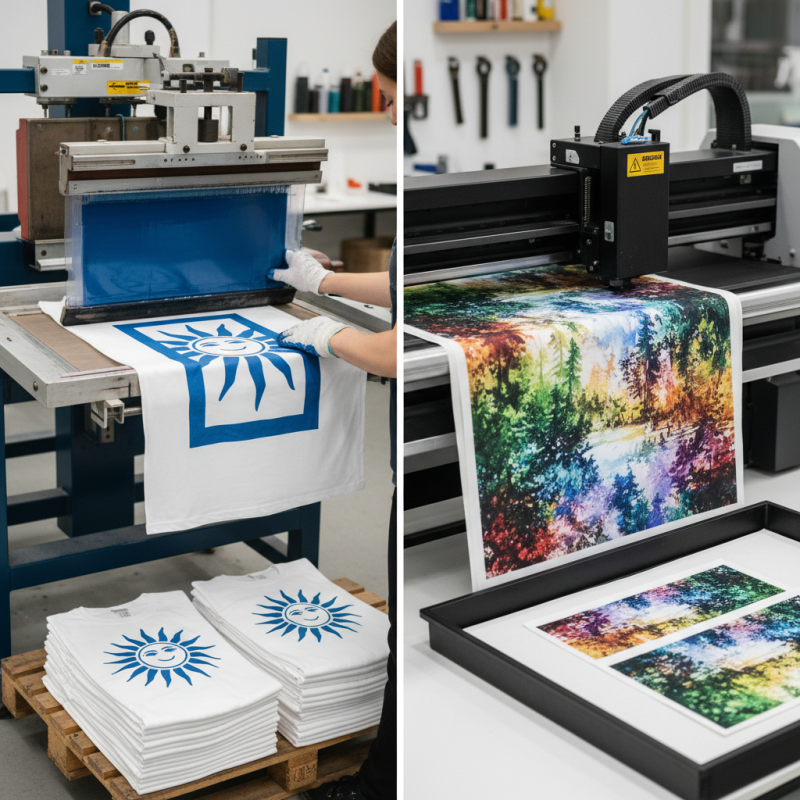
Screen printing is a time-tested technique. It involves pushing ink through a stencil. This allows for vibrant colors and a durable finish. On the other hand, digital inkjet printing offers quick turnaround and versatility. It uses inkjet technology to apply the image directly onto the material. Both methods have unique strengths and weaknesses.
For smaller runs or complex designs, digital inkjet may be more favorable. However, for large quantities with solid color requirements, screen printing shines. Ultimately, the choice depends on specific project needs. Reflecting on these differences can lead to better decision-making in print production.
Understanding Screen Printing: Process and Benefits
Screen printing is a traditional method used for creating vibrant designs on various surfaces. The process involves creating a stencil, or screen, and using it to apply layers of ink. This method is known for its durability and is ideal for large quantities. One of the major benefits is the richness of colors. When applied properly, screen printing achieves a dynamic finish. It can withstand multiple washes, making it ideal for apparel that needs to last.
Despite its strengths, screen printing has limitations. It requires significant setup time, which may not be practical for smaller runs. Each color demands its own screen, complicating multi-color designs. This can lead to increased costs. Additionally, the process may not capture fine details as well as other printing methods. Businesses must weigh these factors against their needs and budget carefully.
Understanding these nuances can facilitate a better choice. Knowing when to choose screen printing over digital inkjet printing simplifies decision-making. The right approach depends on project specifics, like quantity and design complexity. Reflecting on these elements will enhance the overall printing experience.
Exploring Digital Inkjet Printing: Advantages and Features
Digital inkjet printing has transformed the printing landscape significantly. This technology uses tiny droplets of ink to create stunning images. It is ideal for projects that require intricate details and vibrant colors. From prints on paper to textiles, the flexibility is impressive.
One major advantage is the quick turnaround time. Digital inkjet printing is often faster than traditional methods. It allows for short runs and even customization without lengthy setups. Businesses and artists can test ideas rapidly. However, the cost-per-unit can be higher for larger quantities, which may require evaluation.
Durability is another consideration. While digital prints can produce vibrant results, some inks may fade over time. This varies based on the substrate and environmental factors. It's essential to assess project needs carefully. Ultimately, digital inkjet printing caters to specific requirements, but understanding its limitations is vital.
Comparison of Screen Printing and Digital Inkjet Printing
Key Differences Between Screen Printing and Digital Inkjet Printing
When choosing between screen printing and digital inkjet printing, understanding their key differences is essential. Screen printing is ideal for large batches. It offers vibrant colors and durability. According to industry data, screen printing can provide a color vibrancy of up to 90%. However, the setup time is longer, which might be a drawback for smaller orders.
On the other hand, digital inkjet printing excels in detail. It allows for complex designs and is suitable for on-demand jobs. Recent reports indicate that digital printing market growth is projected to reach $14 billion by 2027. The turnaround time is significantly shorter compared to screen printing. Yet, the cost per unit tends to be higher with digital options.
Tip: For small jobs, opt for digital inkjet printing. It saves time and reduces waste. Additionally, if color vibrancy and durability are priorities, screen printing might be the better choice. Reflect on your design needs and order size to make an informed decision. Choosing the right method can impact your project quality and costs significantly.
How to Choose Between Screen Printing and Digital Inkjet Printing? - Key Differences
| Feature |
Screen Printing |
Digital Inkjet Printing |
| Setup Costs |
Higher |
Lower |
| Production Speed |
Fast for large runs |
Slower for large runs |
| Color Vibrancy |
Very vibrant |
High quality |
| Flexibility for Designs |
Limited |
Highly flexible |
| Ideal for |
Large quantities |
Small runs and variety |
| Texture |
Thick, raised |
Smooth |
| Durability |
High |
Moderate |
Factors to Consider When Choosing a Printing Method
When deciding between screen printing and digital inkjet printing, several key factors arise. First, consider the volume of your order. Screen printing is cost-effective for large runs. However, if you need a smaller quantity, digital inkjet printing may be more suitable. Reports indicate that digital printing has increased by 15% in recent years, primarily due to its flexibility and lower setup costs for short runs.
Another important aspect is the material you'll be printing on. Screen printing works well on textiles and can create vibrant colors on dark fabrics. On the other hand, digital inkjet printing excels with a variety of substrates, including paper and plastic. According to industry experts, more than 50% of businesses prefer inkjet for its versatility.
**Tip:** Always request samples before committing. They can reveal potential quality issues or limitations in your chosen method.
Lastly, consider the design complexity. If your design includes intricate details or color gradients, digital printing is the clear winner. Screen printing might cause some details to blur. Reflecting on your audience's preferences can help with your choice. Understanding the impact of print quality can steer you right.
**Tip:** Keep in mind that both methods have their strengths. It’s critical to weigh the benefits carefully against your project requirements.
Cost Analysis: Screen Printing vs. Digital Inkjet Printing
When deciding between screen printing and digital inkjet printing, cost is a crucial factor.
Screen printing typically requires higher initial setup costs. However, it is often more economical for bulk orders. The price per unit decreases significantly as the volume increases.
On the other hand, digital inkjet printing has lower startup fees, making it suitable for smaller runs. This flexibility in quantity allows for quick adaptations to design changes without financial stress.
Tips: Always calculate the total cost before deciding. Include factors like setup, materials, and labor. Understand your project requirements clearly.
If you expect to print large quantities, screen printing may be the wiser investment.
Digital inkjet offers a unique advantage for detailed designs and color gradients. Costs remain consistent regardless of complexity.
However, for plain designs, screen printing can still be cheaper on a per-item basis. Reflect on the importance of quality over quantity, especially for intricate artwork.
Sometimes, the cheapest option might compromise the desired outcome.
FAQS
: Digital inkjet printing uses tiny droplets of ink to create detailed and vibrant images on various surfaces.
It offers quick turnaround times, flexibility for short runs, and customization options without lengthy setups.
Choose digital inkjet for smaller quantities or intricate designs, as it handles complexity better than screen printing.
Digital inkjet printing can have a higher cost-per-unit for larger quantities, making evaluation essential.
Yes, some inks may fade depending on the substrate and environmental conditions. Assess project needs carefully.
It works well on various substrates, including paper and plastic, allowing for diverse applications and designs.
Yes, samples help identify potential quality issues or limitations in your chosen printing method, informing your decision.
Intricate details and color gradients are best suited for digital printing, as screen printing may cause design blurring.
Digital printing has increased by 15% in recent years due to its flexibility and lower setup costs for short runs.
While flexible, it’s important to understand its durability and potential fading, which requires thoughtful project planning.
Conclusion
When considering the best printing method for your needs, it's essential to understand the fundamental differences between screen printing and digital inkjet printing. Screen printing involves a manual process where ink is pushed through a stenciled mesh, making it ideal for large runs and designs with few colors due to its efficiency and durability. In contrast, digital inkjet printing allows for more complex designs and a broader color palette, making it suitable for smaller batches and intricate graphics.
What is the difference between screen printing and digital inkjet printing? While screen printing is generally more cost-effective for bulk orders, digital inkjet printing excels in flexibility and detail for smaller projects. Factors such as production scale, design complexity, and budget are crucial in determining which method to choose. Understanding the advantages of each technique can help you make an informed decision that aligns with your specific printing requirements.

 DD-Tech Print